Search This Blog

Tuesday, December 31, 2024

My 2024 Retrospective

                                            https://i.kisscc0.com/20240626/71/65/A6359RM2N.webp 

                                                 HAPPY NEW YEAR!

 Well, it isn't 2025 yet but I've read my last book of 2024 and posted the review.  So I figured I might as well get moving on the 2024 retrospective post.

There were a total of  38,300 views for this blog in 2024.  This was more than twice as many views as I had in 2023.  So I'm doing pretty well.

 My most viewed 2024 post was on my other blog, Flying High Reviews.  It has more people viewing it regularly than Shomeret: Masked Reviewer.  That most viewed post  was my review of  The Lantern's Dance by Laurie R. King which can be found here.  The most viewed 2024 post on this blog was my review of Mother Tongue: A History of Women's Words by Jenni Nuttall which can be found here.

My number of reads are sadly low this year.  I read only 27 books which is ten fewer than in 2023.  I certainly hope I can read more in the upcoming year.  This will depend on whether my boss retires.  Then I can retire myself.

There were only two five star reads.  Last year I had four of them. This is an alarming trend.  If I have half the number of five star reads in 2025 as I did this year, I will only have one.

So these two five star books are the ones that are receiving the Golden Mask Awards for 2024.  I will post about them below.

1) Better The Blood  by Michael Bennett

  Here is the summation about this book from my Goodreads review:

I thought that this novel was powerful and indeed beautiful and haunting in its resolution. It's been a while since I've read any fiction that deserved to be given five stars for its thematic focus and the complexity of Bennett's view of the various characters who are all parties to this personal and political conflict.

Since it's my only five star fiction of 2024, it is also necessarily my favorite novel of the year.

2) Stories Are Weapons by Annalee Newitz

My Goodreads review of this book is below:

A book with the title Stories are Weapons sounds like it will be disturbing.  Some readers who have not been paying attention to what's been going on in the United States may find it disturbing.  If you have been following American current events, you will not be surprised by what Newitz has to tell us.  Although I didn't find it surprising, I did find it tremendously insightful which is why I would give it the grade of A+ or five stars on Goodreads.

 This is what I considered to be the best non-fiction of 2024.

I sincerely hope that I will read more and rate more of them as A+ in 2025.  There should be no direction to go from here but up.


Saturday, December 28, 2024

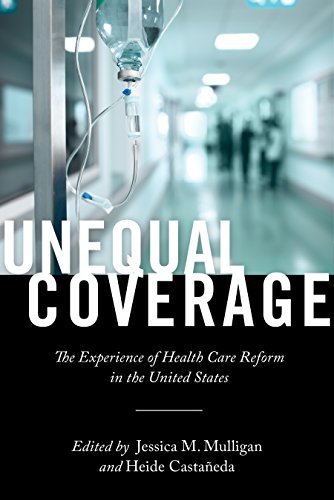
Unequal Coverage: The Need For Health Insurance Reform

 Since I have no record of how I got Unequal Coverage, which I read on my Kindle e-reader, I thought I might have gotten it from Edelweiss Plus.  It's on the Edelweiss website, so it's likely to be the source.


Unequal Coverage is a non-fiction book dealing with health insurance. I read it because I am alternating fiction with non-fiction, and I previously read a novel.  I'm also very interested in health care reform, the topic of this book.  The editors of this essay anthology are Jessica M. Mulligan and Heide Castaneda.

Apparently, the Affordable Care Act (ACA) didn't have as much positive impact on health insurance coverage as was intended.  At the end of 2015, Blacks and Latinos had gains in coverage, but 21% of Latinos and 11% of Blacks were still uninsured.  Undocumented and some legal immigrants were excluded from coverage. It's also pointed out that 1.4 million more Blacks would have been covered if states hadn't had the option to choose not to expand Medicaid.

There is a long history of opposition to programs that are perceived as benefiting people of color.  Such opposition has mostly been concentrated in the South.  As of 2016  90% of the people without health insurance lived in the South.

It was considered unfair that under the ACA contraceptive coverage only applied to women, and that men had to contribute to maternity care.   It seems to me that only single men get no benefit from paying for maternity care under the ACA. Married men with families would get benefit from the ACA's maternity coverage  because of shared family costs. 

Most legal immigrants to the U.S. aren't eligible for health insurance during their first five years of residence.  This is considered as creating stratified citizenship.  Some citizens have more rights than others.

People who have been seriously injured are more likely to view health insurance as a necessity.  I have no injuries, but regard health insurance as a routine cost, though it may become more expensive than it's been lately.  As a senior, I don't consider being uninsured an option. 

There is an essay in this book called "Texans Don't Want Health Insurance--Social Class and the ACA in a Red State" by Emily K. Brunson.  Texas has the highest percentage of uninsured people in the U.S.  The ACA improved health care access for some Texans, but there are also inequalities based on social class. The working poor didn't have options and continued to be uncovered.  I'd imagine that this is because Texas chose not to expand Medicaid.

Brunson concludes that the ACA addressed some health care inequalities, but maintained others or even made them worse.  It also created new inequalities.

There is a mention of a book called Dog Whistle Politics by Ian Haney Lopez that I would like to read.  I put it on hold on my library website.

I had some comments on the essay "Stratification by Immigration Status" by Heide Castaneda.

I learned from this essay that some DACA recipients, who were children when they arrived in the U.S. illegally, could get health insurance through their employers.  Yet I also learned that some legal immigrants can't get Medicaid for five years.  If they earned less than  the federal poverty level, they can get a subsidy to buy private insurance.  This subsidy isn't available to U.S. citizens who earn less than the federal poverty level.

Later in the essay, there is a statement that documented immigrants are only partially included in the ACA.  This explains the limitations in the above paragraph, but not why they exist. 

 There is discussion of the fact that non-citizens have no health coverage, and what happens in hospitals when non-citizens nevertheless need treatment, but can't afford it. Usually, they would end up using the emergency room for non-emergency treatment.  One social worker reported that one undocumented immigrant had gone to the emergency room 28 times in the previous year.  This increases government spending on healthcare.   On the other hand, some documented immigrants feared that using any social services would cause them to be deported for becoming a "public charge". 

There is an essay called "Stratification Through Medicaid" by Elise Andaya. Andaya maintains that Medicaid patients aren't treated with respect.  They are unnecessarily made to wait longer times. Medical staff that the author contacted thought that Medicaid patients should also receive a lower standard of care because they were getting it for free. 

In the essay "Increasing Access, Increasing Responsibility: Activating the Newly Insured" by Mary Alice Scott and Richard Wright,  the authors mentioned that some new patients confused Medicaid with Medicare and thought they couldn't get Medicaid until they were 65.  I have to say that I am not newly insured, but up until I read this essay I thought that Medicaid was Medicare for poor people and that you couldn't get it until you were 65.  There might be wider misperceptions about Medicaid than Scott and Wright imagine. 

In the conclusion by the editors, I learned that only 6% of the U.S. population ever got their health coverage through the Affordable Care Act.  The editors fear that without the ACA the number of uninsured will skyrocket.

I was also struck by a footnote which revealed that Medicare was responsible for the de-segregation of U.S. hospitals because segregated facilities couldn't be funded by Medicare.

I thought this book was very important, but I rated it A- due to there being some repetition throughout the anthology.  Repetition may be some sort of academic requirement, but I still find it an annoyance.


Tuesday, October 15, 2024

Stories Are Weapons

Stories Are Weapons by Annalee Newitz is the first book I'm blogging about in October.  Since I'm starting this post not quite halfway through the month, there's a possibility that I may post again before the month ends.  I'd like to post more on Shomeret: Masked Reviewer.   We'll see what happens.


A book with the title Stories Are Weapons sounds like it will be disturbing.  Some readers who have not been paying attention to what's been going on in the United States may find it disturbing.  If you have been following American current events , you will not be surprised by what Newitz has to tell us.  Although I didn't find the book surprising, I did find it tremendously insightful which is why I would give it the grade of A+ or five stars on Goodreads.

When I ran a search on my Goodreads books, I discovered that this is the second book I've read by Annalee Newitz.  I read her novel The Future of Another Timeline toward the end of 2019 and gave it a very enthusiastic five stars.   So my currently limited memory is the reason I'd forgotten that I read it.  It's not a comment on the quality of the The Future of Another Timeline.   In fact, it got the Best Fiction of 2019 award from me on Shomeret: Masked Reviewer.

Newitz mentions that she could get arrested in some U. S. states for being in drag.  I wondered if these were states where women wearing pants (which is extremely common in the U.S.) is considered "drag".  I am a woman who wears pants more often than not. The Britannica has an article on the subject  here.  Apparently, women wearing pants is no longer considered drag. This seems to have happened in the 1930's.  I feel that this is an important shift.  I personally didn't wear pants until some point during my sophomore year of high school. Until then I wore skirts and dresses.

I had once been a huge fan of James Fenimore Cooper who wrote in the first half of the 19th century.  He wrote The Last of the Mohicans. Newitz considers this classic book a piece of propaganda because the Mohicans weren't disappearing.  In fact, there currently are Mohicans  who are alive in Wisconsin.  

Another Native American people, the Cherokee, sued the state of Georgia over being removed as part of what later became known as the Trail of Tears.  The case was Cherokee Nation v. Georgia, and it went  all the way to the Supreme Court.  The Supreme Court ruled that the Cherokee were not a sovereign nation like foreign states, and therefore didn't have the right to litigate in a court of law.  Yet to my great astonishment I learned from the Wikipedia article on Cherokee Nation v. Georgia that the Supreme Court ruled a year later in Worcester v. Georgia that the Cherokee Nation was sovereign.  Chief Justice John Marshall made the decision in both cases.  I guess that our first Supreme Court Chief Justice simply changed his mind.  I'm glad that he did.

I think that it's bizarre that some 19th century Caucasian Americans believed that Indigenous Americans weren't "Real Indians" if they weren't hunter gatherers which is what they'd been two hundred years previously.  This is why Indians were nonsensically thought to be extinct.  Newitz comments "It would be like insisting that a current day Londoner wasn't truly British unless they spoke Shakespearean English."

Newitz mentions a book called Education For Extinction by David Wallace Hamilton dealing with Indian boarding schools.  Adams wrote  with apparent approval of these schools that  it costs almost a million dollars to kill an Indian in a war, but only  $1200 to give an Indian child eight years of education in a boarding school.  Newitz compares the Indian boarding schools to POW camps.  I thought that was a very valid comparison.

So Indian nations promulgated a revolutionary movement that allowed them to return to their past.  It was called the Ghost Dance.  This was taking place in the context of Indian dancing having been made illegal.  They wanted to dance back the old pre-contact world which existed before European colonists arrived in North America.  Newitz calls the Ghost Dance "a spiritual revival and a protest movement".  They opposed White reservation authorities, refused to speak English, avoided Christian churches and prevented their children from going to residential schools.  I imagine that they must have hidden their children from the authorities.  The newspapers in 1890 portrayed the Ghost Dance as a war dance.  Yet James Mooney, a government anthropologist, said that the Ghost Dance was peaceful.  Nevertheless, Sitting Bull was arrested for allowing the Ghost Dance to be performed on Standing Rock Reservation.  He resisted arrest, and was shot by a police officer.

When Florida's Parental Rights in Education Bill AKA "Don't Say Gay" came up in the book, I ran a search to find out how many states had "copycat" bills progressing through their legislatures.  There have been 42 similar bills in 22 states.  So it's still a minority of states who have such bills advancing through their legislatures, but it's edging up to half the states.  This reflects the sharp political divisions in my country.  

It's interesting that a U.S. bakery who had no gay customers against whom the owner would like to discriminate, took such a case all the way to the Supreme Court and won.  Newitz points out that the baker had no standing in the case.  No one was asking this baker not to discriminate. The Supreme Court shouldn't have taken it, but they did.  Now we have a Supreme Court precedent in favor of discrimination against LGBT citizens in the United States. 

Newitz deals with complaints about Amazon's Rings of Power being historically inaccurate by pointing out that it's fantasy.  There is no history involved. There is such a thing as historical fantasy that takes place in a real historical time and place.  Yet Rings of Power, like Tolkien's Lord of the Rings, takes place in a fantasy realm.  I've also never understood these types of criticism of fantasy.  Historical accuracy is irrelevant when you're talking about fictional people and places.

Stories Are Weapons deals with such interesting concepts and is overflowing with information that was previously unknown to me.  If this book isn't my best read of the year, it will certainly be among my top reads for 2024.


Friday, September 20, 2024

The House on Graveyard Lane

 This is my first blog post of September.  It may also be the only one I'll write this month.  There are only ten days left.  The House on Graveyard Lane by Martin Edwards is #4 in the historical Rachel Savernake series, but it's the only book I've read so far by this author.  I read it because a book club that I attend online had selected it.  I received a copy via Net Galley.


One character in this novel complained about protagonist Rachel Savernake's unhealthy obsession with murder. This amused me, but it  occurred to me that I should have seen such a remark before while reading a murder mystery.   Mysteries do tend to have protagonists who are preoccupied with murder, and they also have more ordinary characters. So I wonder why these more ordinary folk in other mysteries have never reflected on the strangeness of the protagonist's predilections.   Not that Rachel Savernake really is particularly strange.  In fact, I didn't consider her a standout character at all.  I felt that other characters seemed more central to the narrative.

 One of the more prominent characters in The House on Graveyard Lane  is Kiki de Villiers.  This is her married name.  Her husband with the French surname is said to have come from South Africa.  I was curious about French immigrants to South Africa and found a very interesting article about Huguenots in South Africa on Wikipedia.  Huguenots are French Protestants.  They probably fled to South Africa due to persecution by the Catholic majority in France beginning in the 16th century. 

 Kiki  had numerous extra-marital affairs--some with very prominent men.  From my perspective, Kiki's adventures weren't worth the space that the author devoted to them.

There was a financial scheme involving defrauded investors.There was also a murder in which a corpse was altered. I didn't really find any of the plot developments all that interesting.  It was just a series of sordid shenanigans.  I don't feel that it was worth my time.


Friday, August 30, 2024

Incompetently Written Baba Yaga Novel

 I sure could have used some inspiration from reading about a powerful witch who makes life better for Russians during the reign of Ivan the Terrible.  No such luck.

 Yaga, the female protagonist of The Witch and the Tsar , is mythological. She was also so humanized in this novel to the point where I almost forgot the character was mythological.  I decided that this review didn't belong on Flying High Reviews, my blog for strong female protagonists.  This Yaga isn't particularly strong. So that's why it's here on Shomeret: Masked Reviewer. I purchased the book at a local independent bookstore.  (Gasp!  Someone still actually does that! Yes, I am helping to keep this local bookstore in business. I also pass it at least once a week. So I see what's being displayed in the window.) That's really the only positive aspect of my having bought the book.  The store benefited.


The novel opens in May of 1560.  The style is poetic.  In accordance with Baba Yaga's myth, she lives in a log hut which stands on chicken legs, but she calls herself simply Yaga.  Baba means grandmother, yet Yaga is immortal and appears ageless.  I think that referring to her as grandmother is meant to be reassuring.  Yaga is a healer, but she is reputed to be a witch.  Well, she does have a house that can fly.  Otherwise I can't imagine why she's called a witch.  Based on what happens to her later, she doesn't have much power.

I felt let down.  Russia is suffering under Ivan the Terrible.  There is a bit of implied totalitarianism, but the infrastructure for totalitarianism didn't exist this early.  Gilmore was creating a Soviet Union sort of government and imagining that Ivan the Terrible was as capable of controlling Russians as Vladimir Putin. Nyet. It's just not believable.

So Gilmore doesn't think through her conceptualization of either her protagonist or the era in which she placed her.  You know this may be one of the worst books I've read in some time. I'm giving this a C-.  I'd graded this on Goodreads before I finished this review, and I'm going to need to downgrade it. 


Thursday, August 15, 2024

Moving the Moon: A Memoir of Ongoing Theft

I decided to read this pre-publication review copy of Moving The Moon by Andrea Marcolongo because it was relatively short.  I was sure I could read it in the month of August even though my reading speed has slowed so much.  I watch too much television.  The news viewing is necessary, but the watching of drama shows is entertainment.  I could be reading instead.


 I hadn't realized that the content of this non-fiction book would be a shocking revelation.  Even though well known people who were in positions of authority have sometimes been revealed to have engaged in criminal acts, these thefts were so brazen and so tragic for a monument that is central to Western culture. I am a student of history, but I had never heard about these thefts.

 I had thought that the Parthenon was a ruin due to war or conquest.  It would never have occurred to me that British visitors and one prominent British official had actually stolen marble fragments that were pieces of the temple, and statues that were inside the Parthenon in order to ship them back to Britain.  

Why had they stolen from the Parthenon?  Because they were arrogant, and because they could.

The Greeks could have made a diplomatic protest and demanded that Parthenon art and masonry be returned.  I suppose that Greece didn't feel that they were in a position to demand anything of the British.  They didn't really have any power and they hoped that British visitors would benefit their economy. They probably didn't imagine that the British would be so disrespectful as to steal from a sacred place.

When I saw classical era sculptures in the New York Metropolitan Museum as a child, I imagined that they belonged there.  Shouldn't great works of art be displayed in a museum?   It never occurred to me that these were originally objects of devotion in the ancient Greek and Roman religions that had probably come from temples.

Author Andrea Marcolongo spent a night in the Acropolis Museum.  She had written a book about the ancient Greek language.  This is probably why Marcolongo was invited to spend the night in the museum alone.  She was forbidden to vandalize marble sculptures by Phidias, or to steal them for sale.  She could do anything else there.            

Marcolongo had brought one book with her.  It was a biography of the British Lord Elgin who had actually been the thief in chief.  The title of the book that Marcolongo brought to the Acropolis Museum was Lord Elgin and the Marbles by William St. Clair.   I suppose it would be like bringing a biography of Alexander the Great to a place he had conquered and pillaged. Yet Alexander would never have done what Lord Elgin had done to the Parthenon.  He would have had reverence for a Greek temple.

Marcolongo comments that Classical Greece had become "an imagined paradise" for Western Europeans.  I don't forget about slavery or how the Athenians treated women.  So I don't romanticize Classical Greece. 

Marcolongo tells us that there is an image on the south side of the Parthenon of a Centaur attacking a woman with her "peplos flapping in the wind".  This image is called "beautiful".  Who would consider it beautiful?  I strongly suspected that this was an image of rape.  A survivor of rape would find that image traumatizing, not beautiful.  Even a woman who hadn't been a rape survivor wouldn't see it as beautiful, and a little girl who is a virgin could also be traumatized if she had never previously seen such an image.  That leaves men as the only people who would find the image of a Centaur attacking a  woman "beautiful".

Andrea Marcolongo,  an Italian woman, is so upset about the thefts of pieces of the Parthenon, that she wanted to "glue the pieces of the Parthenon together with my own two hands".  She identified with the Parthenon.  If the Parthenon wasn't whole, then she wasn't whole.

In Judaism believers identify with Torah scrolls.  The Torah is a compilation of the books of the Bible in Hebrew. There is a Sabbath prayer about the Torah which begins "she is a tree of life for those who hold on to her".  This isn't just a metaphor.  People who study Torah are thought to live longer because of their study.  

It wasn't just the Parthenon that suffered from thefts, the statue of Demeter was stolen from Eleusis.  Demeter might have had a strong objection to this because the ship carrying Demeter's statue to England sank within view of the white cliffs of Dover.  It took many years to retrieve that statue from the bottom of the sea.  The people of Eleusis believe that the thieves were cursed.  I don't know about that, but it may be that the statue took some time to withdraw its objections to being displayed in a museum.  Today it stands in a corner of a museum in Cambridge.

At one point, Marcolongo seems to feel sorry for thieving Lord Elgin. I've been a huge fan of Robin Hood, but when it's British aristocrats stealing from the Greeks, whose only wealth was their archaeological artifacts, that's completely the reverse of what the legendary outlaw did.  On the other hand, the Greek Embassy in France, seemed to have sufficient funds to underwrite Marcolongo's book.  

I've read one five star book this year, yet I'm still hoping there will be another that I'd give a grade of A on this blog.  We'll see.  There's still a few months left to go.


Thursday, July 11, 2024

The Dalai Lama's Call For Revolution

It has never been my aim to have a political blog, but here I am with another political book.  Yet this time the author is a religious figure, not a politician.  

This book was actually written by Sofia Stril-Rever based on her conversations with the Dalai Lama.  He addresses his words to young people born in the 21st century. 


The word "lama" means why in Hebrew.  A Tibetan Lama is a revered sage who is a master of the Tibetan version of  Buddhism.  So due to having studied Hebrew, I have more than one association with "lama".

The Dalai Lama would apparently like to see a North American Union of the U.S. and Canada.  I consider this unlikely.  In Canada, I think it's possible that there may be an independent Quebec.  What happens in the U.S. is very much dependent on the results of the 2024 Presidential election.  

I am going to abbreviate Dalai Lama as DL in the rest of this piece, so I will not need to type it repetitively.

The DL believes that war should be considered an unacceptable alternative.  He calls war a "criminal enterprise".  Actually,  I think war is much worse than a criminal enterprise.  A criminal enterprise is marginalized.  War involves entire societies because governments engage in it. Governments can be overthrown, but usually not during a a war.  A war is considered a crisis that must be resolved before a change in leadership can be considered.   Leaders who were brought to power by a war, seek to prolong the war in order to maintain their power. 

The DL discusses antisemitism and the phrase "Never again".  It means that the WWII genocide of six million Jews must never happen again. I learned from my reading in history that hatred of Jews is cyclical, and that it reappears during serious social crises.  The Holocaust of WWII has so far been the worst because it was the most thorough and organized.  This is likely to happen again.  Hitler was not unique.

The DL praises India's constitution for adding Justice to the French Revolution's goals of Liberty, Equality and Fraternity.  He tells us that "Without  economic and social justice, fraternity is no more than a noble but empty ideal. "

I was impressed that the DL wanted to abolish hereditary debt that made peasants slaves of the wealthy.  I had read about this problem in a book about modern slavery called Disposable People which I reviewed at the linked title.

The DL had to persuade Tibetans to accept a constitution that limited his powers.  He had to educate his people about democracy.  I've never heard about a nation where democracy was proposed by a traditional ruler.  The DL's  democratic revolution was completed in 2011.

There is a section of this book called "Bring on the Revolution of Compassion" which the DL considers the inspiration of all other revolutions.  He said this in 2017 to students at the University of California at San Diego.  He thinks that the readers of this book have grown up in individualistic societies where compassion is considered "a sign of weakness".  He argues that aggression limits brain development, but compassion plays a role in brain growth.

The DL goes on to discuss men and women as if they really did embody traditional gender role expectations.  I know this is not the case.  Not all women are empathic because they are mothers.  Some women are very poor at mothering.  Some men are creators rather than destroyers. Based on his rather conventional ideas about gender, he thinks the world would be better off with women in positions of leadership.  I beg to differ.  I found a link about powerful women who were as terrible as any male tyrant at The Cruelest Women.  Compassionate leadership is not a gender associated trait.  I would rather see a country ruled by the DL.  Though I would and did support Elizabeth Warren, a compassionate woman politician, when she ran for President of the United States.  

Moving on to media, the DL says that we see an average of 2600 murders on television a year. "Whereas in real life, I hope, you will not see a single one."  That's true, if you are white and financially successful.  Gang warfare happens in impoverished neighborhoods inhabited by minorities and immigrants. This is not a coincidence, nor is it a new phenomenon.  West Side Story didn't take place among the wealthy and powerful.  Law enforcement has always prioritized protecting the privileged.  

The DL informs us that a major cause of homelessness is that all the Single Room Occupancy Hotels were torn down throughout the United States.  It used to be that Single Room Occupancy Hotels were a place to stay temporarily while looking for a permanent place to live when you're a new arrival in an area.  Now that option doesn't exist anymore.  That's sad.  It decreases mobility.  You can't move to another city unless you already know where you're going to be living.

The DL speaks disparagingly of wealthy Western countries where elders live alone.  In some cases, this is their own choice.  They have always preferred to live alone, and this didn't change once they became older.  Unfortunately, there comes a point when these  elders who are solitary by preference can't take care of themselves anymore.  Then they must choose having someone help them at home, or going to live in a nursing home.  Facing the end of their independent lives is really difficult for them.  No doubt they would have been better off  throughout their lives if they had always preferred to live with others in a cooperative environment.  Yet I do believe that people should live as they choose if it's a possibility for them. 

I  have helped people when they want to be helped.  I think that being charitable is important to the functioning of society.  Not all people will be able to provide for themselves throughout their lives.  They may need temporary help or permanent help if they become disabled. I think that ideally we as a society should be  providing supportive services to the disabled, and even us individualistic Americans do have such programs.  We're not that inhumane after all.

In the Epilogue, Sofia Stril-Rever  said that the DL asked 350 French lawyers to start a revolution in France.  Lawyers had led the 1789 French revolution.  I think lawyers don't start revolutions without a cause to motivate them.  If a political revolution could save us from climate disaster, that would be a worthwhile cause, but I don't really think that a revolution in France is what will save the world.  The DL just arbitrarily wants another French revolution because he's a fan of the first French revolution.  I don't consider that especially wise.  There are plenty of very real problems that need real solutions.

So I conclude that while the DL did have some insights in this book, he isn't exactly a tremendous fount of wisdom when it comes to politics.  Perhaps he should stick to matters that he does understand like paths to Enlightenment. 


Sunday, June 2, 2024

The ARENA: The Memoir of a Tennessee Politician, Judge and Reformer

In my personal life, I enjoy surprises.  Yet as a reviewer, I expect to have made a prior agreement with a publisher, editor or author regarding any book that I receive. If I have elected to receive an item in advance of publication from Net Galley or Edelweiss Plus, I know what I can reasonably be expected to do to promote them.

 So I have to confess that I was annoyed when The ARENA by Carol J. Chumney arrived in the mail unexpectedly. I felt blindsided.  I knew nothing of Chumney.  I wondered what sort of coverage would be considered reasonable for her memoir.  Did she realize that I am only a blogger?  I don't work for a major publisher or distribution network.  I am not a widely respected literary figure, nor do I play one on TV.  I sincerely hope that Chumney is not disappointed by what I and Shomeret: Masked Reviewer can do for The ARENA.                             


I have never been to Tennessee, but I do know people who do reside in Tennessee or own property there.  Carol Chumney has been a Tennessee state legislator.  I also learned from her article on Wikipedia  that she is currently a Shelby County circuit court judge. 

On a recent episode of the public television series Finding Your Roots, one of the guests had ancestors from Shelby County.  I saw scenes that showed me what Shelby County looks like.  So I know a little bit about Chumney's context.

Chumney's political visibility increased exponentially when she invited country singer Garth Brooks to testify in support of her bill to prohibit ticket scalping in Tennessee.  Garth Brooks' appearance before the Tennessee House Judiciary Committee was in all the Nashville newspapers. Chumney got the anti-ticket scalping bill out of committee with an amendment to exempt college sports.  One legislator opposed the bill because he had a relative who had scalped tickets in Kentucky.  I guess family comes before ethics for many people.  The bill didn't become law at that point.

I found a web page that is a good overview on the subject of ticket scalping here.  Any time you buy event tickets from an individual, there is a possibility that the tickets have been scalped.  This means that they are being re-sold for prices that are higher than the individual had originally paid.  There are states where ticket scalping is illegal.

Chumney didn't support cuts to public schools to make up the shortfall in the Memphis budget.  Due to white flight to the suburbs, the student body of Memphis public schools had become primarily African American.  So I believe that any proposal to balance the budget by taking money from the public schools would be racist by intention.  I was glad to see that Chumney wasn't an advocate for private schools like those who'd left Memphis to become suburbans.

This is the memoir of a politician which contains a great deal of political content.  So I hope that I've managed the balancing act of reviewing this political book without being excessively political.  I found The ARENA far more interesting than I expected.


Monday, April 29, 2024

Women in the Valley of the Kings

 I could conceivably write and finish this review in these last few days of April.  To my own great disappointment, I have only managed to read two books this month.   Unfortunately, I suspect that I may only read one book in May though.  My current read is a thick volume.

 I downloaded Women in the Valley of the Kings from Net Galley.  They gave me 48 hours to download it, but I did that right away.  The last book I reviewed on this blog that came from Net Galley dates back to a year ago.     


Sheppard tells us that European and American archaeologists in Egypt took their valuable artifacts home to protect them from the local Arab population who they considered "savages".  

I met one Arab on my college campus.  It felt like an occasion of importance for both of us, so we decided to have a dialogue on social issues.  I don't remember the specifics of what we said, but we parted on good terms.  We called each other "cousin" as descendants of the biblical Abraham.  I never saw him again.  This is still my only in person encounter with an Arab.  

When I looked through my books on Goodreads,  I got through four pages of entries before finding a book by Arab author Raja'a Alem . The link is to Alem's Wikipedia page.  She is a Saudi Arabian writer who won the Arabic Booker Prize in 2011 for her book The Dove's Necklace.  I reviewed The Dove's Necklace on this blog here.  I wasn't aware that it had won an award when I read and reviewed it.  It seems to me that my exposure to books by Arabs has been pretty limited.  I do feel that I need to remedy this situation.

Getting back to Women in the Valley of the Kings, I discovered through this book that two American millionaires in Egypt had fled the U.S. to avoid prosecution.  They were both members of the Tweed Ring headed by Boss Tweed.   I don't intend to get into the weeds of this scandal in this review, but I do find it interesting that Egypt ended up being a refuge for wealthy American criminals during the late 19th century.  They vandalized and pillaged Egypt.  Yet this was called a  "Golden Age" of Egyptian archaeology.

Early archaeology hadn't been careful.  I had read before about Heinrich Schliemann destroying layers at his Turkish archaeological site in the 1860's and 70's in order to find ancient Troy.  Gaston Maspero, the director of the Department of Antiquities,  refused Schliemann permission to do any further excavation.

Amelia Edwards had published a bestselling memoir about her travels in Egypt, and used her earnings to fund archaeology through founding the Egypt Exploration Fund.   She sponsored Matthew Flinders Petrie who had measured and surveyed the pyramids on the Giza plateau.  He was a careful man who lived frugally, and expected those who assisted him to do the same.

There were public unwrappings of mummies in London to learn the identities and genders of the remains. There were also letters to The Manchester Guardian in opposition to these public mummy unwrappings.

Author Sheppard believed that the more people learned about ancient Egypt through public unwrappings, the more money would be available for museums with Egyptology exhibits, for university Egyptology programs and for organizations like the Manchester Egyptian Association.

Margaret Murray, who trained Egyptologists, was also involved in the cause of women's suffrage.  She was a member of the Women's Social and Political Union (WSPU) founded by the Pankhursts to promote women's suffrage in 1903.  Margaret Murray spoke to the WSPU in 1910.  Suffrage was granted to all women in the UK in 1928.

Myrtle Broome was an artist who copied the art on Egyptian tomb walls.  Her first artwork involved decorating the walls of her new family house.  She designed the mantlepiece and the textiles that decorated it.  Myrtle was also one of the original students of Margaret Murray.  Myrtle's first trip to Egypt was in 1927 when Flinders Petrie asked her to come to Kau el Kebir to copy the art in the Middle Kingdom tombs that Petrie and his team had excavated several years previously.  The tombs were now  exposed  and the art was deteriorating.  The art needed to be copied before it was destroyed.

In the 1920's, the only ways to preserve the art without destroying it in the process were photography or hand copying.  Yet there was no color photography.  So photography was limited to black and white which wasn't an accurate depiction of the art.  That left hand copying as the only true reproduction of the artwork.

An Egyptian police chief named El Gorzawy was courting Myrtle.  She stayed at his police outpost.  He gave large dinners in Myrtle's honor and introduced her to the leaders of the community. Myrtle liked him, but she didn't think she could marry a man who wasn't English.  Since no reason was given for this attitude, I can only conclude that she was prejudiced against Egyptians.  I'm sure that such a prejudice would have been considered praiseworthy among the English of her era.  If she had been willing to marry El Gorzawy, that would have been considered shocking to other English people in Egypt at the time.

Myrtle was close to Margaret Murray and the Petries.  So she thought she could get work in Egypt.  She found a position with Amice Calverley in Abydos. Myrtle hadn't known Amice previously.  Amice had grown up in South Africa where her father served with the army.  Then they moved to Canada where Amice attended the Slade School of Fine Art.  She also learned to play piano and won a scholarship at the Royal College of Music.  She wrote an opera, but it was never performed.  She then worked at the Ashmolean Museum of Art and Archaeology which was the first British public museum.

 In 1926 Amice met Leonard Wooley, the archaeologist.  He was excavating Ur and Amarna.  He persuaded her to become an archaeological artist.  Since her opera had failed, she decided to follow his advice.  She worked with archaeologist Aylward M. Blackman at the Temple of Seti I at Abydos.  He needed an artist to copy the art which was deteriorating.  The temple was L shaped and built by Ramses II during the 19th dynasty.  There were seven chapels honoring Seti I, Ptah, Re-Horakhty, Amun-Re, Osiris, Isis and Horus.  Each chapel showed Seti I offering to the God honored there. In return he received life, dominion and the royal insignia.  This means to me that it is the Gods who make him a King.  The priests performed a ritual that transformed Seti I into Osiris.  The temple had a list of the ancestors of Seti I and the Abydos King list.  Egyptologists noticed who was left off the lists and was therefore not worthy of being remembered.

There was a building called the Osireion located behind the temple.  Margaret Murray excavated it in 1902-3.  The Egyptian Exploration Society hired Herbert Felton who was both an engineer and a photographer in 1925.  He photographed the Osireion, but the light was terrible in the temples which made for bad photos.  So they hired Amice Calverley to draw the art.  She placed drawing paper on top of the photo.  After she finished the tracings in Oxford, they were taken back to Egypt to be completed in the temple in front of the original art.  Then experts were called in to check the drawings.  Since there had been deterioration of the wall art, the drawings also had to be incomplete.  The incomplete sections were noted with hash marks.  Amice's work was considered particularly good and she was to continue working at Abydos full time starting in January 1928.  She continued to do well and was hired for an additional season.  She went alone for that season, so she also had to run the camp.

That season Egyptologist James Breasted arrived with patron John D. Rockefeller Jr. who was still one of the wealthiest people in history.  His father, John D. Rockefeller was the owner of Standard Oil. Rockefeller was impressed by Amice's drawing ability.  He contributed what would be the equivalent of  $1.2 million today.  Amice was now able to hire to pay another copyist full time.  Mary Jonas warned Amice against taking too much American money.  Mary Jonas wanted it "to be a British undertaking".  When Amice died she received a four page obituary in The Journal of Egyptian Archaeology, but it's important to note that Amice's cousin wrote the obituary.

I think that Egyptian artifacts should always have belonged to the Egyptians.  Shouldn't Egyptians have been the ones to study those artifacts?  It was their history.  How would the British and French have liked it if  Egyptians had come to Britain and France to engage in archaeology, and claimed the British and French artifacts they dug up as theirs?  

 Sheppard tells us that Egypt was given "nominal independence" in 1919.  I learned from running a search on "Egypt 1919" that this wasn't an accurate characterization of events.  Egypt revolted against English colonial rule in 1919.  It wasn't until 1922 that the UK recognized Egypt's independence. 

The English colonizer perspective dominated this book. I am not a fan of that attitude.  When I looked at archaeology from the Egyptian perspective, I realized that British archaeologists were stealing their history.  I also realized that all archaeology during this period was theft by people from colonizing powers.  Since the author is British, she doesn't recognize that she was writing about theft, but Egyptians surely must have realized it.  This would have been one of the many reasons why they kicked the British out of their country.  I have been radicalized by looking at this book from the Egyptian perspective.


Friday, April 19, 2024

Mother Tongue: A History of Women's Words

I'd abandoned two books in a row.  I thought that a feminist book would keep me engaged. So I picked up Mother Tongue: A History of Women's Words.  I have a B.A. in history.  I find anything on historical subjects fascinating.  I purchased Mother Tongue at a local independent bookstore which isn't something I do very often.


Nuttall came to the realization that for the most part she was finding words that men used about women.  Most of the words that women used weren't recorded. Yet sometimes she found words of women who were the first to write on particular subjects.

Words for parts of women's bodies were troublesome in various periods. A new edition of Chaucer for Georgians dealt with anatomical vocabulary that was unmentionable in the 18th century.  Taboos on that topic got even stronger among the Victorians.  Chaucer must have been severely bowdlerized during the 19th century. 

Probably the most taboo word related to women's sexuality is "clitoris".   The word clitoris is ancient, and Nuttall believes that its function was understood in ancient times. The Wikipedia article devoted to artist Sophia Wallace  revealed that she created "the first anatomically correct sculpture of the clitoris" in 2013. 

In the 14th century Parliament was debating a Buggery Act.  The idea of adding "gross indecency" between women was brought up, but the House of Lords thought it was a bad idea.  They were sure that most women didn't know how women had sex. The Lord Chancellor thought that only one woman in a thousand had even heard of women having sex with each other.  The House of Lords  also thought that an indecency law that included lesbianism would lead to women being blackmailed or falsely accused.

I  learned from Mother Tongue that "slut" originally meant low status servant, and didn't have any sexual connotation.  

Nuttall also wants us to know that "miscarriage of justice" was the first recorded use of the word "miscarriage".  Pregnancy loss was usually referred to as a mischance or misfortune.  I suspect that this is the way a man would refer to it.   A woman who has lost a wanted  child wouldn't consider it a mere "mischance" or "misfortune".  For her it's a tragedy.

In the 17th century a miscarriage was called "an abortive birth".  The implication is that it was accidental.  An intentional ending of a pregnancy was called "an induced miscarriage"  or "a procured miscarriage".  I would think that "procured" implies that someone other than the pregnant woman had provided the means for ending the pregnancy. 

We are told in Mother Tongue that injuring or poisoning a pregnant woman in order to cause a miscarriage was considered a felonious assault.  Usually it was the injured woman who brought the case to court.  Yet between the 14th and 16th centuries such charges were no longer prosecuted because a fetus didn't have legal personhood.  This is an argument that is currently used by advocates for the legality of  consensual abortion. 

Nuttall cites "Edward Cooke" as saying that once a child has quickened, which means that the baby has moved, abortion is a criminal offense.  Since this is a legal pronouncement, I suspect she probably means the 17th century English jurist, Sir Edward Coke.  I am providing the link to his Wikipedia article.  It seems to me that  current anti-abortion advocates insist that abortion should be illegal from  conception.  I expect that Sir Edward Coke would have regarded that as an extreme position. Later in the 19th century, this issue was viewed quite differently.  By 1837 abortion was regarded as criminal in any stage of pregnancy. 

Nuttall doesn't like the use of "delivery" to describe a birth.  She says that this implies that the baby is a takeout order.  I should point out that takeout orders go back to the 1920's, but the use of delivery to describe a birth started in the 1570's according to The Online Etymology Dictionary.

I learned from Nuttall that "husbandry" meant the skills needed to run a household.  By that definition, the husband was usually the wife.   In fact, she thinks that John Fitzherbert was mansplaining when he published A Boke of Husbandrie  for rural housewives in 1523.  I'm pretty sure that mansplaining was regarded as standard behavior then.

 Nuttall cites a study of woman witnesses in court trials by Alexandra Shepard.  Shepard analyzed over 3000 witness statements between 1550-1728.  They had to establish that they were credible by showing that they were worthy of credit by describing their assets and how they earned a living.  Shepard discovered that 2/3 of the married women in her study were creditworthy. 

Nuttall tells us that there was once an idea that pregnancy due to rape meant that a woman had really consented.  In other words, there was a widespread belief that there was no such thing as a non-consensual pregnancy.  That's truly bizarre from a modern perspective, but the science dealing with women's biological cycles hadn't been established yet.  People didn't really know how women got pregnant. 

I included everything that most interested me about Mother Tongue in this review.  I consider this book worthy of an A- grade.  The minus is for content that I considered tedious or repetitive.


Sunday, March 31, 2024

The Lost Van Gogh: A Crime Thriller With Historical Elements

 The mystery book club that I attend has three selections every month.  We get selection lists together months in advance so that we have plenty of time to obtain and review them.  Sometimes I notice a title that particularly interests me.  So I get hold of it ASAP and read it.  The Lost Van Gogh  by Jonathan Santlofer is an example of a book club selection that I read early.

The Night Portrait by Laura Morelli is another historical fiction that I've reviewed that has similar themes. See my review here . Both The Lost Van Gogh and The Night Portrait deal with Nazi art theft. They are also both dual period novels. 

 A big difference is that in  The Night Portrait, one of those periods is World War II.  The WWII protagonist is an art conservator. She was preserving Nazi looted art for posterity.  In order for these works to be hanging in contemporary museums or in the homes of 21st century art collectors, there would need to have been someone like her, making sure it survived.  WWII is not one of the periods that Santlofer's protagonists live in.  His characters live in the present or in Van Gogh's late 19th century context.


I consider The Lost Van Gogh a crime novel rather than a mystery.  It deals with the theft of Van Gogh's rumored final self portrait.  It's not definitely certain whether it still exists or not.

The contemporary protagonist in The Lost Van Gogh is artist Luke Perrone whose great grandfather was an art thief.  So readers shouldn't be surprised that not all the art referenced in this book was acquired legitimately.  

The first time I saw a Van Gogh painting was probably in New York's Museum of Modern Art.  In fact it may have been The Starry Night  which I associate with Don McLean's song Vincent, a song written in honor of Van Gogh that is often referred to as "Starry Starry Night". You'd think that a 20th century song would not be the first thing that pops into my mind when viewing a 19th century painting, but that is what has happened to me. <lol!>

I normally don't comment on  the practical logistics in a fictional scene, but I was bemused by a character whose hands were tied being able to hold a gun.  I wondered if he was holding the gun in his teeth.  Seriously?!

After reading in The Lost Van Gogh about so many paintings by well known artists having been stolen by the Nazis, I looked up my favorite painting.  It happens to be by Vermeer.  It's called Girl Asleep.  I've seen it many times at the New York Metropolitan Museum of Art.  When I travel to New York, I like to pay a visit to Girl Asleep.  In the 1696 Vermeer catalog, it was apparently called A Drunken Sleeping Maid at a Table.  This is a example of late 17th century prejudice against people who have to work for a living. Why did the cataloger decide that she was drunk?  I think she was overworked and exhausted.  

Although Santlofer has written series books, The Lost Van Gogh isn't one of them.  It's an independent work which I thought was well written and well researched.


Saturday, March 23, 2024

Wayward Voyage

When author Anna M. Holmes sent me historical fiction Wayward Voyage, I already knew that it would center on historical female pirate Anne Bonny.  I had read about her fictional equivalent, Fanny Hackabout-Jones , in Fanny by Erica Jong some time ago.  I still haven't read an actual history book about Anne Bonny.  Perhaps that's because she's so much fun to read about in fiction.  I wonder if the real Anne Bonny would be disappointing in comparison.

Maybe she wouldn't be disappointing at all.  I found a biography of Anne Bonny by historian Phillip Thomas Tucker on his website here . I put it on hold. We'll see whether I'll enjoy reading about the real Anne Bonny.

But let's move on to Anna M. Holmes' fictional version of Anne Bonny's story.


 Wayward Voyage opens on the island of Jamaica in 1720. 

 There was a reference to  methods of abortion which I thought I should bring up for those who think abortion is modern.  A male character protested that "No one has the right to interfere with God's will."  This goes to show that anti-abortionists aren't a modern phenomenon either.

Anne's friend (some say they were lovers) Mary Read, who kept up a convincing male disguise, was a "top man" in this book. This meant she could climb the ship's rigging up to the top and announce "Land ho" when they were nearing land.   I thought this was an impressive skill. 

Anne and Mary aren't idealized.  They had some troubling attitudes including racism which I imagine was fairly typical for the time.

Anne is portrayed as heterosexual.  She was married to pirate captain Jack Rackham, but wasn't very loyal to him.  Mary Read considered Anne untrustworthy.

I don't have any additional remarks in my notes that I thought should be included in a review.  So this will be fairly brief.  I liked this book enough to rate it four stars on Goodreads.


Saturday, March 2, 2024

Legacy of the Third Way

This review of  Legacy of the Third Way was requested by the author, Abdul Kundi , in the middle of February.  It took me a little over two weeks to read this book.  It wasn't the book.  It's the slow reading speed that has plagued me in 2024.  I keep on hoping that I'll be able to read more.  Yet I am managing to review this book well before its expected publication date on March 31.  So I'm doing better than I thought.


Legacy of the Third Way is a near future science fiction novel. Sher Shah, the protagonist, is an American with a Punjabi heritage. He was born in 2020.  This novel is partly an account of Sher's life, and partly an account of the development of  a fictional political party that was established to be a home for those who are disillusioned with the two mainstream political parties in the United States.

Sher eventually entered politics, but he worked as a math instructor in a prison before he started his political career.  This allowed for the introduction of an important character who was an ex-convict.  He had been one of Sher's math students. I liked the fact that the rights of the formerly imprisoned are a topic that's explored in Legacy of the Third Way.

Since this book centrally deals with a political campaign, funding is a significant concern.  By 2050, this future society has coins, but no paper currency. This is only 26 years from now.  The dollar of our contemporary world no longer existed. The currency of Legacy of the Third Way's era has no backing.  The dollar of our era is supposed to be backed by the gold in Fort Knox.

 Agreeing to have a currency without backing in less than thirty years may seem like a radical change in a relatively brief time frame, but author Kundi provides what may be a credible explanation for the abolition of paper currency.  I don't know enough about finances to be sure.

We are told that deficit spending no longer existed, but there is a huge deficit that was created by our past history of deficit spending. One way to get rid of that deficit would be ginormous raises in taxes. Taxes are the source of government income. In that scenario, individuals and companies would go bankrupt because they couldn't afford to pay their taxes. 

The other way to get rid of the deficit is to wipe the slate clean and pretend there is no longer any deficit.  Yet if we wanted to avoid creating a new deficit, many government programs could no longer exist.  There probably wouldn't be any social security or medicare.   Few people could afford to retire without social security, and the health care crisis would be much worse without medicare.  

Could the budget be balanced with major cuts in defense spending?   I sincerely doubt that would even be considered. The Pentagon seems to be sacrosanct.

 How could poor people buy food if the government stopped issuing food stamps because the food stamp program no longer existed?

 There are so many government services that the majority of the people rely on.  The economy would collapse if all these services had to be paid for with the tax funds that the government received.

Sher makes references to meetings in cyberspace rather than meeting face to face.  This is so convenient, but impoverished people with no computers would have to go elsewhere to get free online access--such as a public library.  If all meetings were online, there would be no way for free services to accommodate them all.

There is a lack of finality in the resolution of this book.  So there may be a sequel.  I can't be certain.   

I liked Sher.  I thought he had his heart in the right place.  I decided to give this book a B+.