Search This Blog

Thursday, March 6, 2025

Red Flag Warning: California Wildfires, Evacuations and Climate Change

  I received a review copy of the essay anthology Red Flag Warning from Edelweiss, a website that distributes books to reviewers in advance of publication.                                  


 Red Flag Warning deals with the ongoing tragedy of California wildfires.  People losing their homes to the fires and having to evacuate is the most important news story for Californians.  Everyone is wondering if their area will be the next to burn.

Some local firefighters watched their own homes burn. 

To learn more about the background of the area described in this book, I looked up Taylorsville which is officially a part of Plumas County, California with a population of 150.  Red Flag Warning mentions that the local tavern displayed a mural of the flag of the proposed state of Jefferson. This implies that at least some of the residents would like to secede from California. 

Below is an image of the Jefferson state flag:

                               https://www.crwflags.com/fotw/images/u/us-jeff2.gif

Dan Kearns was regarded as the leader of those in Taylorsville who refused to evacuate in the face of the Dixie Fire and the much smaller  Fly Fire advancing toward the town. It seemed to me that Dan Kearns was being romanticized as a "frontiersman"  from the Wild West, but Kearns didn't make such claims about himself.  He said he was "just a guy" who was a local fire volunteer.  

When I read that those in the evacuation camps were getting sick from smoke inhalation, it seemed to me that the camps were too close to the fires. Admittedly, the Dixie Fire was the largest single source fire in California history.  Yet I really think the camps should have been further away.     

The author of that particular essay thinks that people watch news about their disaster for entertainment.  I watch and am reading about your disaster wondering when I'll have to evacuate myself.  I don't think my area is immune to disaster. I also don't think I'm the only one who has that fear.

I was particularly interested in reading about incarcerated firefighters. Incarcerated firefighters are one third of California's firefighting force.  They earn $2-$5 per day which becomes $1-$2 per hour while they are fighting an active fire.

 I found the interview with formerly incarcerated firefighter Brandon Smith illuminating.  He was from gang territory in Los Angeles County.   Smith was trained to fight fires in prison and became employed as a firefighter after he was released. He was the first formerly incarcerated firefighter to become a professional firefighter.  Brandon Smith initially refused to be a firefighter, but he liked the idea of serving the public when he'd been called a "public nuisance".

                        *******************

3/5/2025 Important Note

I have learned since reading this book that Brandon Smith lost his home in Altadena to the  Eaton Fire.  I think this man is a genuine hero and that he deserves support.  I generally don't put financial solicitations on this blog but I thought that those who are inclined to contribute should be aware that there is a  Go Fund Me Page for Brandon Smith.

                     **********************

  Smith told interviewer Dani Burlison that many localities require that firefighters be certified as Emergency Medical Technicians (EMTs).  You can't become an EMT if you have two felony convictions and if you have one felony conviction, you may not be eligible for EMT training until 5-10 years after your sentence is served.

Since there is a shortage of firefighters in California, California Governor Gavin Newsom signed legislation that formerly incarcerated firefighters "without any issues" could apply to have their felony convictions expunged.  I would assume that no issues means that the formerly incarcerated firefighter hadn't committed any crimes, or been charged with any since being released from prison.

As fire swept through Southern California, Margaret Elysia Garcia, the author of that particular essay,  said that she was thinking of  deceased science fiction author Octavia Butler, who grew up in Pasadena and is buried in Altadena which was partly burned.  Her novel Parable of the Sower deals with the impact of climate change, and predicts a similar political situation to the one we have now.  There is a scene in Parable of the Sower in which the protagonist was walking on Highway 20 through Lake County, and both sides of the highway are burning. Garcia was re-reading that scene on the first day of the Valley Fire.  I can imagine the horror that Garcia would have been feeling as fiction was fast becoming fact.                                        

I found a chart of  The Top 20 Most Destructive California Wildfires.  I note that the Eaton and Palisades wildfires,which are listed as the second and third most destructive, were 2025 wildfires.  They are 100% contained, but their causes are still under investigation.

This book is very significant and had a powerful impact on me.  I'm giving it a grade of A +.


Thursday, February 27, 2025

The Last Witch in Edinburgh

 I decided to read a fantasy for a change, but books that are historical are my preference.  This book opens in Edinburgh, Scotland in 1824 where they were having a witchcraft hysteria, and hanging women accused of being witches.  It's The Last Witch in Edinburgh.   


 The author Marielle Thompson is aware that this is alternate history.  According to a Wikipedia article on Witch Persecution in Scotland, the last executions of women for witchcraft happened in  1706 and the last trial of a woman for witchcraft happened in 1727.  I'm not exactly sure why Thompson wanted to situate such events nearly a century later.

Much later in the narrative, an important character is raped while she was a college student, but it didn't go to trial.  This happened in the 21st century.  I learned from A paper published by the government of Scotland that the conviction rate for rape in Scotland is lower than for any other crime.  This is probably why the rape that happened in this novel was never reported to the police.

I was intrigued by a reference to a Clootie Well in this book.  This is a holy well with a tree growing beside it.  Strips of cloth or ribbons are tied to the tree to memorialize a deceased person. The memorial tree established for a murder victim in The Last Witch of Edinburgh seemed similar but there was more investment in it.  There was a portrait of the murder victim and numerous other portraits of deceased people significant to the college students who gathered at the memorial tree.  The tree seemed to become a metaphor for all the grief in that community.  It was very special to them.

I was touched by The Last Witch of Edinburgh, but I tend to want more from a book on an intellectual level. So I considered it very good, but not excellent.


Tuesday, February 18, 2025

Home By Nightfall: My Musings on a Mystery Taking Place in the Victorian Period

I wanted to have read a mystery in February for the mystery book club that I attend,  so I picked out a mystery from the top of a book pile.   It was Home by Nightfall by Charles Finch.  This is the first book I've read by this author.


The novel takes place during the Victorian period which is one of my least favorite historical contexts. Not only does it contain  the aristocracy of earlier periods, but hypocrisy is rampant.  There is nothing that I find attractive about this era.  So why did I actually read the entire book?  

Maybe it was the fact that Muller, the missing man, was a pianist.  I think I was hoping for some musical content. Alas, there wasn't any. Muller being missing was the pretext for the book.  There wasn't much focus on him as a character or on his professional activities.  

There were moments in Home By Nightfall that amused me.  Charles Lenox , the dectective, had said that his brother Edmund was wasting his time by teaching women how to read.  I enjoyed Edmund's cutting response.  He asked Charles if the time of Molly, Edmund's deceased wife, had been valueless.  He also told Charles, "I shall teach the horses to read if it pleases me."

I learned the origin of the phrase "reading them the Riot Act" from Home By Nightfall.  I already knew that King George I, the first Hanovrian King of England, was afraid that the Jacobite supporters of the previous dynasty would overthrow him.  I first read about Jacobites in the work of Robert Louis Stevenson when I was child.  Stevenson caused me to have a sentimental attachment to Jacobites. Far more recently, I wrote about Jacobites in a review of  a Steve Moretti novel on this blog here.

 I have to say that if Home By Nightfall had been about Jacobites, I would have been more receptive when I read it. Victorian characters put me in a sour mood. I gave it a C grade which I consider the equivalent of two stars.  Fans of the Victorian era may want to disregard my perspective and substitute their own.  


Thursday, February 13, 2025

Hidden Libraries

 With a degree in library science, no one will be astonished to learn that I love libraries.  Through Hidden Libraries by D. C. Helmuth, I discovered libraries whose existence was totally unknown to me.


I knew about Little Free Libraries which are small collections on the street.  I didn't know that the first Little Free Library was begun in 2009, and that there are now 75,000 of them in 88 countries.  

I also picked up a book from a Little Free Library for the first time recently.

It was mentioned in Hidden Libraries that two librarians stocked a cart with books that local homeless people said they wanted to read.  I thought that was a wonderful idea.  

I very much disliked the woman who requested The Lord of the Flies "to teach a friend what the world was really like".  When I read The Lord of the Flies, I remembered thinking that it was what the world would be like if it were populated solely by adolescent boys, or people who had the mentality of adolescent boys. 

I discovered that there were cards in the front of library books because you were supposed to sign the card and leave it with library staff.  No one did that anymore.  I think I did it with books I borrowed from my university's library, but never with books from public libraries.  It wasn't expected from users at public libraries.

I was disgusted to learn that in Bogota, Columbia  the wealthy threw books they purchased in the trash after they were finished reading them.  This happened every day!  A man found these books that had been thrown in the trash and established a library with them.  I could never throw a book away myself.  Even if I disliked it, someone else might love it.

This book stated that deaf children were isolated unless they were taught sign language.  This gives the impression that there is a single deaf sign language that is used all over the world.  There are different deaf sign languages in various countries, or even local deaf sign languages.  I even read about two deaf children who created a language to communicate with each other. 

I thought that The Think Differently Book Exchange was an amazing idea.  This collection existed in New Zealand.  It was in a catering refrigerator which was full of books that individuals donated because the books caused them to think differently.  I personally would want to keep books that caused me to think differently.  I would have to buy a second copy of such books to donate.

There were numerous types of libraries mentioned that I haven't discussed here.  This was absolutely fascinating. I considered this a book about alternative libraries and graded it A. 


Tuesday, December 31, 2024

My 2024 Retrospective

                                            https://i.kisscc0.com/20240626/71/65/A6359RM2N.webp 

                                                 HAPPY NEW YEAR!

 Well, it isn't 2025 yet but I've read my last book of 2024 and posted the review.  So I figured I might as well get moving on the 2024 retrospective post.

There were a total of  38,300 views for this blog in 2024.  This was more than twice as many views as I had in 2023.  So I'm doing pretty well.

 My most viewed 2024 post was on my other blog, Flying High Reviews.  It has more people viewing it regularly than Shomeret: Masked Reviewer.  That most viewed post  was my review of  The Lantern's Dance by Laurie R. King which can be found here.  The most viewed 2024 post on this blog was my review of Mother Tongue: A History of Women's Words by Jenni Nuttall which can be found here.

My number of reads are sadly low this year.  I read only 27 books which is ten fewer than in 2023.  I certainly hope I can read more in the upcoming year.  This will depend on whether my boss retires.  Then I can retire myself.

There were only two five star reads.  Last year I had four of them. This is an alarming trend.  If I have half the number of five star reads in 2025 as I did this year, I will only have one.

So these two five star books are the ones that are receiving the Golden Mask Awards for 2024.  I will post about them below.

1) Better The Blood  by Michael Bennett

  Here is the summation about this book from my Goodreads review:

I thought that this novel was powerful and indeed beautiful and haunting in its resolution. It's been a while since I've read any fiction that deserved to be given five stars for its thematic focus and the complexity of Bennett's view of the various characters who are all parties to this personal and political conflict.

Since it's my only five star fiction of 2024, it is also necessarily my favorite novel of the year.

2) Stories Are Weapons by Annalee Newitz

My Goodreads review of this book is below:

A book with the title Stories are Weapons sounds like it will be disturbing.  Some readers who have not been paying attention to what's been going on in the United States may find it disturbing.  If you have been following American current events, you will not be surprised by what Newitz has to tell us.  Although I didn't find it surprising, I did find it tremendously insightful which is why I would give it the grade of A+ or five stars on Goodreads.

 This is what I considered to be the best non-fiction of 2024.

I sincerely hope that I will read more and rate more of them as A+ in 2025.  There should be no direction to go from here but up.


Saturday, December 28, 2024

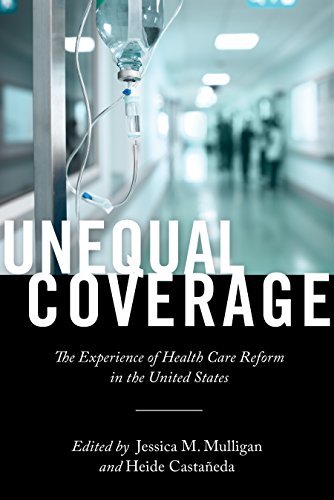
Unequal Coverage: The Need For Health Insurance Reform

 Since I have no record of how I got Unequal Coverage, which I read on my Kindle e-reader, I thought I might have gotten it from Edelweiss Plus.  It's on the Edelweiss website, so it's likely to be the source.


Unequal Coverage is a non-fiction book dealing with health insurance. I read it because I am alternating fiction with non-fiction, and I previously read a novel.  I'm also very interested in health care reform, the topic of this book.  The editors of this essay anthology are Jessica M. Mulligan and Heide Castaneda.

Apparently, the Affordable Care Act (ACA) didn't have as much positive impact on health insurance coverage as was intended.  At the end of 2015, Blacks and Latinos had gains in coverage, but 21% of Latinos and 11% of Blacks were still uninsured.  Undocumented and some legal immigrants were excluded from coverage. It's also pointed out that 1.4 million more Blacks would have been covered if states hadn't had the option to choose not to expand Medicaid.

There is a long history of opposition to programs that are perceived as benefiting people of color.  Such opposition has mostly been concentrated in the South.  As of 2016  90% of the people without health insurance lived in the South.

It was considered unfair that under the ACA contraceptive coverage only applied to women, and that men had to contribute to maternity care.   It seems to me that only single men get no benefit from paying for maternity care under the ACA. Married men with families would get benefit from the ACA's maternity coverage  because of shared family costs. 

Most legal immigrants to the U.S. aren't eligible for health insurance during their first five years of residence.  This is considered as creating stratified citizenship.  Some citizens have more rights than others.

People who have been seriously injured are more likely to view health insurance as a necessity.  I have no injuries, but regard health insurance as a routine cost, though it may become more expensive than it's been lately.  As a senior, I don't consider being uninsured an option. 

There is an essay in this book called "Texans Don't Want Health Insurance--Social Class and the ACA in a Red State" by Emily K. Brunson.  Texas has the highest percentage of uninsured people in the U.S.  The ACA improved health care access for some Texans, but there are also inequalities based on social class. The working poor didn't have options and continued to be uncovered.  I'd imagine that this is because Texas chose not to expand Medicaid.

Brunson concludes that the ACA addressed some health care inequalities, but maintained others or even made them worse.  It also created new inequalities.

There is a mention of a book called Dog Whistle Politics by Ian Haney Lopez that I would like to read.  I put it on hold on my library website.

I had some comments on the essay "Stratification by Immigration Status" by Heide Castaneda.

I learned from this essay that some DACA recipients, who were children when they arrived in the U.S. illegally, could get health insurance through their employers.  Yet I also learned that some legal immigrants can't get Medicaid for five years.  If they earned less than  the federal poverty level, they can get a subsidy to buy private insurance.  This subsidy isn't available to U.S. citizens who earn less than the federal poverty level.

Later in the essay, there is a statement that documented immigrants are only partially included in the ACA.  This explains the limitations in the above paragraph, but not why they exist. 

 There is discussion of the fact that non-citizens have no health coverage, and what happens in hospitals when non-citizens nevertheless need treatment, but can't afford it. Usually, they would end up using the emergency room for non-emergency treatment.  One social worker reported that one undocumented immigrant had gone to the emergency room 28 times in the previous year.  This increases government spending on healthcare.   On the other hand, some documented immigrants feared that using any social services would cause them to be deported for becoming a "public charge". 

There is an essay called "Stratification Through Medicaid" by Elise Andaya. Andaya maintains that Medicaid patients aren't treated with respect.  They are unnecessarily made to wait longer times. Medical staff that the author contacted thought that Medicaid patients should also receive a lower standard of care because they were getting it for free. 

In the essay "Increasing Access, Increasing Responsibility: Activating the Newly Insured" by Mary Alice Scott and Richard Wright,  the authors mentioned that some new patients confused Medicaid with Medicare and thought they couldn't get Medicaid until they were 65.  I have to say that I am not newly insured, but up until I read this essay I thought that Medicaid was Medicare for poor people and that you couldn't get it until you were 65.  There might be wider misperceptions about Medicaid than Scott and Wright imagine. 

In the conclusion by the editors, I learned that only 6% of the U.S. population ever got their health coverage through the Affordable Care Act.  The editors fear that without the ACA the number of uninsured will skyrocket.

I was also struck by a footnote which revealed that Medicare was responsible for the de-segregation of U.S. hospitals because segregated facilities couldn't be funded by Medicare.

I thought this book was very important, but I rated it A- due to there being some repetition throughout the anthology.  Repetition may be some sort of academic requirement, but I still find it an annoyance.


Tuesday, October 15, 2024

Stories Are Weapons

Stories Are Weapons by Annalee Newitz is the first book I'm blogging about in October.  Since I'm starting this post not quite halfway through the month, there's a possibility that I may post again before the month ends.  I'd like to post more on Shomeret: Masked Reviewer.   We'll see what happens.


A book with the title Stories Are Weapons sounds like it will be disturbing.  Some readers who have not been paying attention to what's been going on in the United States may find it disturbing.  If you have been following American current events , you will not be surprised by what Newitz has to tell us.  Although I didn't find the book surprising, I did find it tremendously insightful which is why I would give it the grade of A+ or five stars on Goodreads.

When I ran a search on my Goodreads books, I discovered that this is the second book I've read by Annalee Newitz.  I read her novel The Future of Another Timeline toward the end of 2019 and gave it a very enthusiastic five stars.   So my currently limited memory is the reason I'd forgotten that I read it.  It's not a comment on the quality of the The Future of Another Timeline.   In fact, it got the Best Fiction of 2019 award from me on Shomeret: Masked Reviewer.

Newitz mentions that she could get arrested in some U. S. states for being in drag.  I wondered if these were states where women wearing pants (which is extremely common in the U.S.) is considered "drag".  I am a woman who wears pants more often than not. The Britannica has an article on the subject  here.  Apparently, women wearing pants is no longer considered drag. This seems to have happened in the 1930's.  I feel that this is an important shift.  I personally didn't wear pants until some point during my sophomore year of high school. Until then I wore skirts and dresses.

I had once been a huge fan of James Fenimore Cooper who wrote in the first half of the 19th century.  He wrote The Last of the Mohicans. Newitz considers this classic book a piece of propaganda because the Mohicans weren't disappearing.  In fact, there currently are Mohicans  who are alive in Wisconsin.  

Another Native American people, the Cherokee, sued the state of Georgia over being removed as part of what later became known as the Trail of Tears.  The case was Cherokee Nation v. Georgia, and it went  all the way to the Supreme Court.  The Supreme Court ruled that the Cherokee were not a sovereign nation like foreign states, and therefore didn't have the right to litigate in a court of law.  Yet to my great astonishment I learned from the Wikipedia article on Cherokee Nation v. Georgia that the Supreme Court ruled a year later in Worcester v. Georgia that the Cherokee Nation was sovereign.  Chief Justice John Marshall made the decision in both cases.  I guess that our first Supreme Court Chief Justice simply changed his mind.  I'm glad that he did.

I think that it's bizarre that some 19th century Caucasian Americans believed that Indigenous Americans weren't "Real Indians" if they weren't hunter gatherers which is what they'd been two hundred years previously.  This is why Indians were nonsensically thought to be extinct.  Newitz comments "It would be like insisting that a current day Londoner wasn't truly British unless they spoke Shakespearean English."

Newitz mentions a book called Education For Extinction by David Wallace Hamilton dealing with Indian boarding schools.  Adams wrote  with apparent approval of these schools that  it costs almost a million dollars to kill an Indian in a war, but only  $1200 to give an Indian child eight years of education in a boarding school.  Newitz compares the Indian boarding schools to POW camps.  I thought that was a very valid comparison.

So Indian nations promulgated a revolutionary movement that allowed them to return to their past.  It was called the Ghost Dance.  This was taking place in the context of Indian dancing having been made illegal.  They wanted to dance back the old pre-contact world which existed before European colonists arrived in North America.  Newitz calls the Ghost Dance "a spiritual revival and a protest movement".  They opposed White reservation authorities, refused to speak English, avoided Christian churches and prevented their children from going to residential schools.  I imagine that they must have hidden their children from the authorities.  The newspapers in 1890 portrayed the Ghost Dance as a war dance.  Yet James Mooney, a government anthropologist, said that the Ghost Dance was peaceful.  Nevertheless, Sitting Bull was arrested for allowing the Ghost Dance to be performed on Standing Rock Reservation.  He resisted arrest, and was shot by a police officer.

When Florida's Parental Rights in Education Bill AKA "Don't Say Gay" came up in the book, I ran a search to find out how many states had "copycat" bills progressing through their legislatures.  There have been 42 similar bills in 22 states.  So it's still a minority of states who have such bills advancing through their legislatures, but it's edging up to half the states.  This reflects the sharp political divisions in my country.  

It's interesting that a U.S. bakery who had no gay customers against whom the owner would like to discriminate, took such a case all the way to the Supreme Court and won.  Newitz points out that the baker had no standing in the case.  No one was asking this baker not to discriminate. The Supreme Court shouldn't have taken it, but they did.  Now we have a Supreme Court precedent in favor of discrimination against LGBT citizens in the United States. 

Newitz deals with complaints about Amazon's Rings of Power being historically inaccurate by pointing out that it's fantasy.  There is no history involved. There is such a thing as historical fantasy that takes place in a real historical time and place.  Yet Rings of Power, like Tolkien's Lord of the Rings, takes place in a fantasy realm.  I've also never understood these types of criticism of fantasy.  Historical accuracy is irrelevant when you're talking about fictional people and places.

Stories Are Weapons deals with such interesting concepts and is overflowing with information that was previously unknown to me.  If this book isn't my best read of the year, it will certainly be among my top reads for 2024.